If you’re running operations in Asia right now, you’re probably planning 2026 with one eye on your P&L (profit & loss) and the other on the news. Slower growth, geopolitical tension around the region, currency swings, floods, and other natural disruptions. None of that stops your customers from showing up during peak season.
We spend most of our time inside ops reviews with QSR, F&B, and retail brands across Southeast Asia. So this isn’t a big “thought leadership” piece. It’s a short letter about what is actually working for our clients when the season gets loud, messy, and unforgiving.
What we’re seeing is simple:
Tools like WhatsApp and spreadsheets are still useful for talking to people, but they break down when you’re trying to enforce standards across hundreds of stores, temp staff, and rotating shifts. Messages get buried. Tasks get lost. HQ sees noise instead of a clean picture.
So instead of aiming for last-minute hero moves this holiday season, we want to show you a calmer way to run. This approach not only curbs shrinkage but also allows you to rest easy, knowing you have a solid strategy in place for the season ahead.
Peak hours plus temporary workers equals missed steps, repeated NCs (non-conformances), and brand differences. How to stop this leak? Set up digital processes for each store, position, and shift, with automatic escalations. No green, no near.
Avoidable loss: hot kitchens, full fridges, and hasty handoffs. How to stop this leak? Tasks with proof (pictures, timestamps, thresholds) and explicit issue categories to locate and terminate duplicates
Relying on WhatsApp groups and a spreadsheet does not provide immediate clarity. Despite the number of chats you receive daily, it can still be challenging to determine which store is outperforming the others. You can handle exceptions instead of chasing updates with intuitive dashboards that display pass/fail, late tasks, and active issues by city, area, or store.
Before peak (Week 1–2)
During peak (Weeks 3–6)
After peak (Week 7–8)
Time to value In real life, the implementation phase lasts about a month, the go-live lasts four to six weeks (SOP preparedness is important), and the full value usually comes in six months.
Plain-English flow: Routine → Miss → Escalation → Owner → SLA Timer → Close with Evidence → Visible on Dashboard.
KFC | QSR has over 700 restaurants across Indonesia | กรณีศึกษา
Customers report the results, which depend on how ready the SOP is and how big the rollout is.
It's not required if it's not planned, recorded, and seen. And optional doesn't scale.
Use WhatsApp to talk to others. Use Nimbly to enforce standards and demonstrate the completion of tasks on a large scale.
It's the end of the year, so we're sharing what works. Effective execution now establishes the foundation for next year.
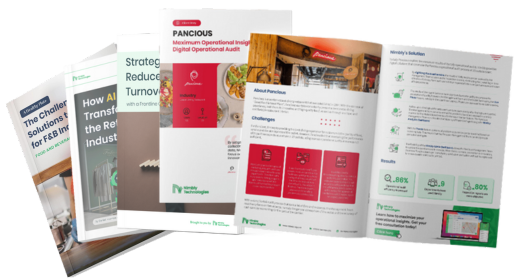
Download the F&B Case Study Pack (KFC, Chatime, and more).
Used by 200+ brands and 20k+ operators in 11+ countries.