Try Nimbly For FREE!

No cost, no commitment, and no credit card needed.

Try for Free
Nimbly Technologies logo
See how the Nimbly Platform simplifies operations in 5 Minutes

Watch Now
Book a Demo

Losing Clients? Fix Product Knowledge Gaps Now

May202553108 Thupm31Asia/Jakarta, 2025Asia/JakartapmThu, 29 May 2025 20:15:00 +0700
3 minutes

Table of Contents


Subscribe to Nimbly Digest

What is Product Knowledge?

That's why product knowledge matters. It's the backbone of excellent customer service. At its core, product knowledge is understanding what you sell inside and out—features, benefits, unique selling points, and how it compares to competitors. It's not just memorizing specifications; it's understanding how your product addresses real-world problems.
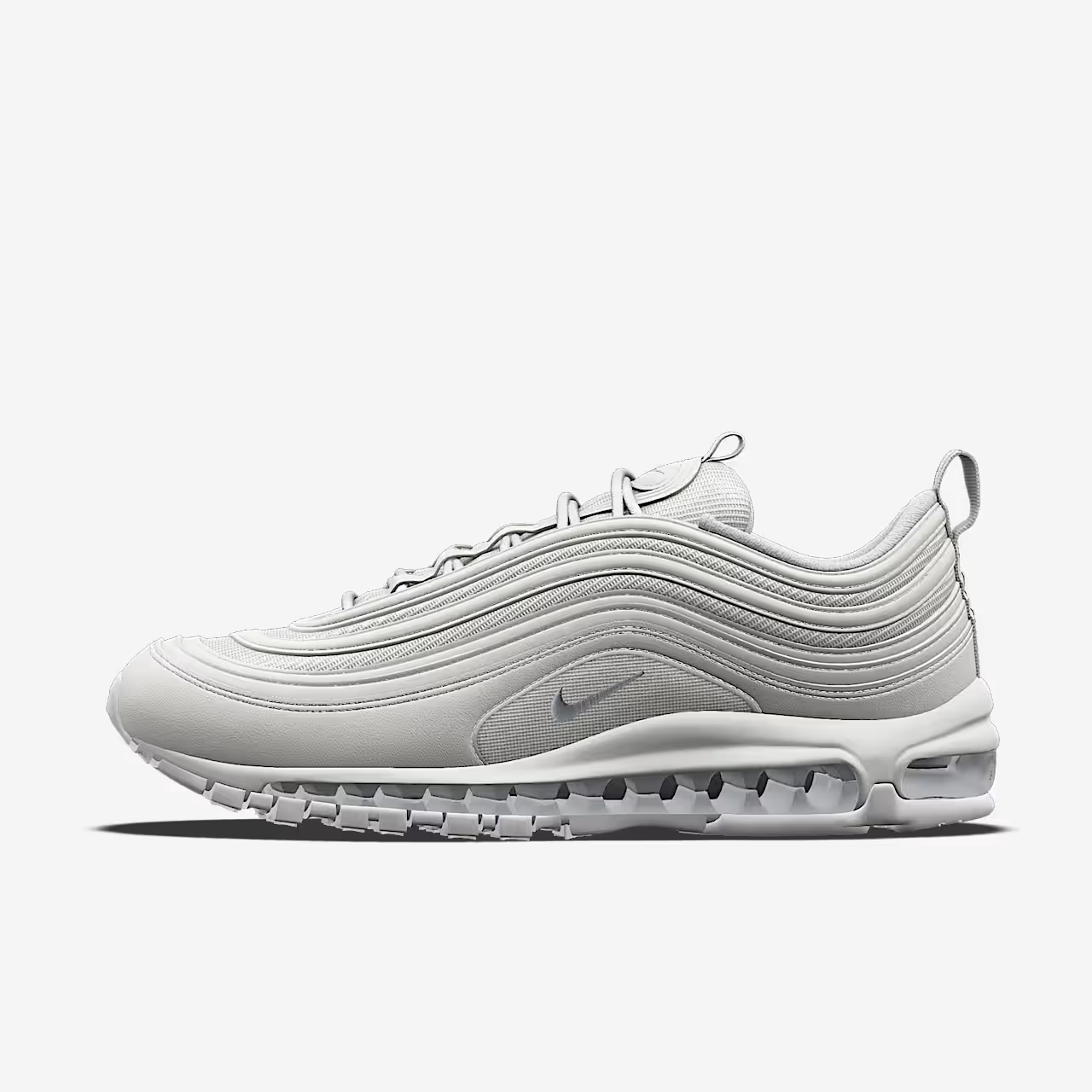
Product Knowledge Examples

Take Nike Air Max sneakers. A salesperson with product knowledge doesn't just say, "These are comfy." They explain: "The air-cushioned sole reduces impact on your knees during runs, and the breathable mesh keeps your feet cool."

Or imagine selling an AI-powered frontline platform like Nimbly. You'd highlight how it utilizes AI to help frontline workers perform at their best, whether they are new or veterans, saving reps up to 10+ hours weekly. That's product knowledge in action.

What Are the 4 Levels of Product Knowledge?

Think of product knowledge like learning to drive:

  • Basic Awareness: Knowing what the product does (e.g., "Nimbly automate schedules and reports").
  • Feature Knowledge: Understanding how it works (e.g., "It creates seperate 'slack channel' for each issue found").
  • Benefit Translation: Connecting features to real-life wins (e.g., "No more messy Google Forms + Whatsapp combo").
  • Application Mastery: Knowing when and why to use it (e.g., "Perfect for growing companies handling 20+ stores").

How to Improve Product Knowledge for Sales Teams?

Let's get practical. Here's how to turn your team into product experts:

  1. Train Like a Pro: Host workshops with product engineers (they built it—they know it best).
    1. Use role-playing: "Pretend I'm a customer who hates tech. Sell me this app."
    2. Build a Knowledge Hub :
  2. Create a shared space (like Nimbly's AI-powered platform) with videos, FAQs, and case studies. Think of it as a "Wikipedia" for your product.
  3. Get Hands-On: Let reps use the product. If you sell coffee machines, give them one to brew at home. They'll learn faster by doing.
  4. Gamify Learning: Run quizzes with prizes to motivate students. "Who can name the most features of Product X?" Bonus points if they explain the ROI!

What Types of Product Information Should Salespeople Acquire?

Salespeople need more than a list of specs. They need:

  • Core Features: Technical details (e.g., "12-hour battery life").
  • Customer Stories: "A nurse used this app to organize her shifts—she saved 5 hours a week."
  • Pricing & ROI: "This software costs $50/month but saves teams 20 hours weekly."
  • Limitations: "This laptop isn't great for gaming—let me show you alternatives."
  • Roadmap: "Next month, we're adding a mobile app feature!"

https://hellonimbly.com/10-reasons-why-employees-will-benefit-from-having-product-knowledge/

Why is Product Knowledge Important?

  • Build Customer Trust and Credibility

When you answer questions confidently, customers think, "These folks know their stuff." Trust = sales.

  • Boost Sales and Conversions

A representative who understands how a product addresses specific problems can upsell like a pro. "This camera's low-light feature is perfect for your nighttime vlogs!"

  • Help Overcome Customer Objections

The customer says, "It's too expensive"? A knowledgeable rep fires back: "True, but it lasts 5x longer than cheaper brands. Let me show you the math."

  • Improve Customer Satisfaction and Retention

Happy customers return. They'll stick around if they feel heard and helped, and will likely tell their friends.

  • Differentiate Brand from Competitors

Competitors sell similar products. Knowledgeable reps highlight your unique perks: "Our blender comes with a 10-year warranty—unheard of in this price range!"

  • Reduce Returns and Complaints

When reps set clear expectations ("This shirt shrinks if you machine-wash it"), customers won't rage later.

FAQs About Product Knowledge

What is product knowledge?

It's understanding your product's features, benefits, and how it solves customer problems.

What are the four levels of product knowledge?

  1. Basic awareness
  2. Feature knowledge
  3. Benefit translation
  4. Application mastery.

How do businesses measure product knowledge?

Through quizzes, role-playing assessments, customer feedback, and tracking sales performance.

Source:
Take full control of your business operations

Book a Demo >watch our demo video

For you

Take full control of your business operations

Discover more from Nimbly Technologies

Subscribe now to keep reading and get access to the full archive.

Continue reading